

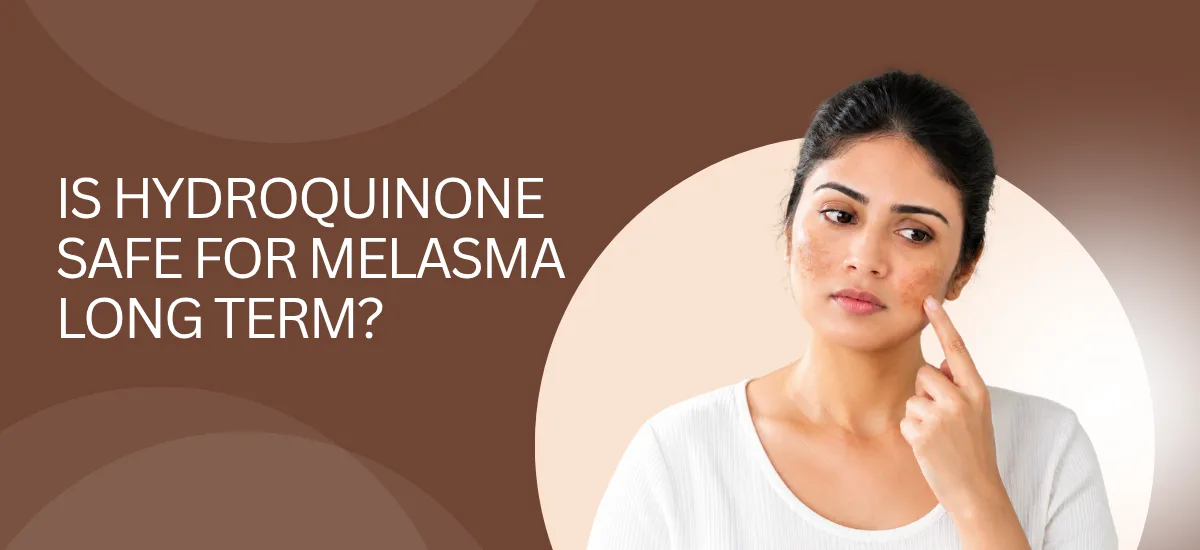
No, hydroquinone isn’t meant for continuous, indefinite use. Daily application over long stretches can lead to lasting skin damage, including a rare but serious discoloration called ochronosis. Most dermatologists treat hydroquinone for melasma as a short, focused course rather than a permanent fixture in a skincare routine. Used correctly and for a limited period, it remains one of the more effective options in melasma skin treatment, but that effectiveness depends heavily on knowing when to stop.
According to Dr. Pooja Chopra, a Dermatologist in Andheri West, Mumbai at The SkinTalk Clinic, “Patients sometimes keep using hydroquinone well past the point it’s helping, simply because it worked early on. That’s exactly when the risk starts outweighing the benefit.”
01
How Long Is It Safe to Use Hydroquinone for Melasma?
There’s a fairly narrow window where hydroquinone does its job well without causing problems, and going past it starts tipping the risk in the wrong direction.
- Three to four months is the usual safe stretch. Most dermatologists prescribe hydroquinone in cycles around this length, followed by a break, rather than as something used every day without pause.
- Stronger formulations mean a shorter runway. Anything above 4% concentration comes with a higher chance of side effects, so it gets used for less time and under closer watch.
- The break in between isn’t a suggestion, it’s part of the plan. Giving the skin a few months off lets pigment-producing cells settle down before deciding whether another round is even needed.
- Having a dermatologist involved changes the risk picture entirely. Hydroquinone used with proper supervision and regular check-ins is a different story from the same cream used on and off for years without anyone tracking it.
Getting the timing and strength right isn’t something worth guessing at on your own, and that’s really the point of a proper consultation for pigmentation treatment.
02
Does Melasma Come Back After Stopping Hydroquinone?
Stopping the cream doesn’t mean melasma is gone for good, and it helps to understand why that’s the case.
- The tendency toward melasma doesn’t leave with the tube. Hydroquinone works by slowing down melanin production while it’s active, but it doesn’t touch the skin’s underlying tendency to develop melasma in the first place.
- Sun exposure right after stopping is usually the trigger. Pigment that faded nicely during treatment can start creeping back within weeks if sun protection isn’t kept up once the hydroquinone stops.
- A follow-up routine makes more difference than most people expect. Moving to something gentler, azelaic acid or tranexamic acid, once a hydroquinone course ends tends to help hold onto the results for longer.
- How soon it comes back really varies. Some people stay clear for months, others see pigment sooner, and a lot of that comes down to sun exposure and hormonal factors.
This whole pattern, fading during treatment and the chance of it returning afterward, gets covered in more depth in our article on melasma treatment, worth a look for anyone weighing hydroquinone as part of a longer plan.
03
Why Choose Dr. Pooja Chopra?
Dr. Pooja Chopra has close to two decades of experience in dermatology. Hydroquinone prescriptions at The Skin Talk Clinic always come with a set duration and a follow-up plan, not an open-ended go-ahead to keep using it. Since the line between helpful and risky comes down to how strong it is and how long it’s used, progress gets checked regularly instead of left for the patient to figure out alone. The aim is to know when to stop and whether another course is actually needed.
04
FAQs
1. Can hydroquinone remove melasma permanently?
No. It fades pigmentation well while it’s being used, but melasma is a chronic condition, so the tendency to develop it again usually sticks around even after the skin looks clearer.
2. Can I use hydroquinone for the long term?
Not really. Using it continuously without a break raises the risk of side effects like ochronosis, which is why it’s typically prescribed in short, supervised courses instead.
3. How long is it safe to use hydroquinone for?
Around three to four months at a time, then a break, depending on the strength being used and how the skin’s responding.
4. Does melasma come back after stopping hydroquinone?
It can, especially with sun exposure or hormonal shifts. Keeping up a maintenance routine and staying consistent with sunscreen helps slow that down.
05
References
Disclaimer: This blog is for educational purposes only and does not replace professional medical advice.
