


A Q-switch laser works by sending short, controlled bursts of light into the skin, targeting the extra melanin that’s built up without disturbing the tissue around it. That’s really the whole idea behind Q-switch laser for melasma. It’s part of why doctors reach for this option once creams and topical routines haven’t made much difference on their own. Melasma tends to sit deeper than an average sunspot, and it doesn’t take much, hormones, heat, a bit too much sun, to stir it back up. Melasma laser treatment can’t switch that tendency off permanently. What it does manage is breaking those pigment clusters down into pieces small enough for the body to clear out gradually, which is why a single session almost never finishes the job and a full course tends to work better instead.
According to Dr. Pooja Chopra, a Dermatologist in Andheri West, Mumbai at The SkinTalk Clinic, “Melasma patients often expect one laser session to sort everything out. I try to set that expectation right at the start. This is something we build over several weeks, matched to that patient’s skin, not a quick, one-time fix.”
01
How Does Q-Switch Laser Actually Work on Melasma?
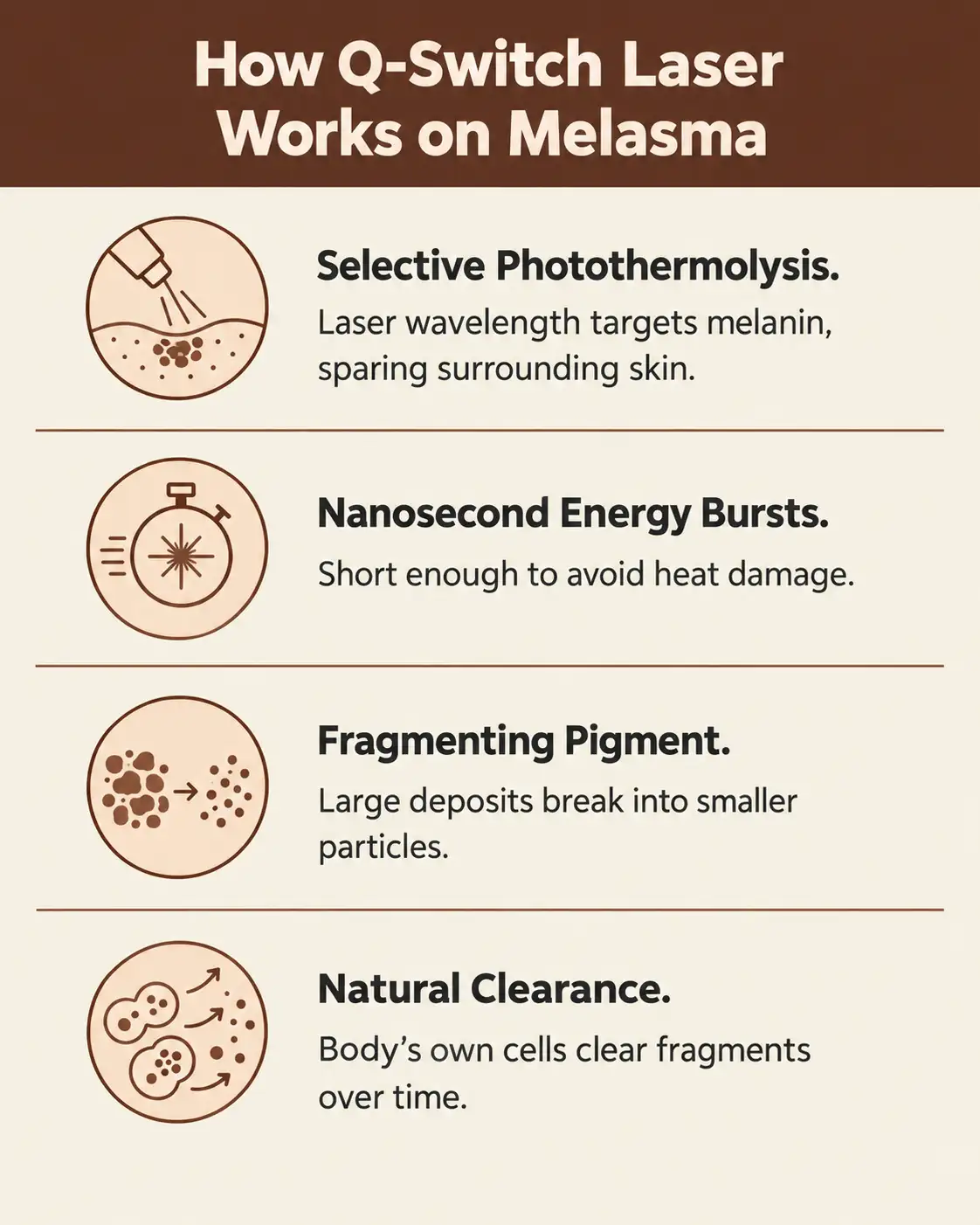
The mechanism itself is fairly precise once you break it down, but what matters more day to day is how that mechanism gets applied to melasma specifically. Settings that work well for one patient can end up doing very little for another, mostly because melasma varies so much in depth and stubbornness from person to person. Some patches sit close to the surface and respond fairly quickly. Others run deeper and need a more patient, staged approach with lower energy across more sessions rather than one strong pass. This is also where melasma differs from ordinary pigmentation. Push it too hard, and there’s a real chance of the opposite problem, a temporary rebound in pigment rather than the fading you’re aiming for.
Melasma doesn’t respond the same way for everyone, which is why the clinic focuses on proper assessment before melasma treatment begins.
02
What Should You Expect During and After Q-Switch Laser Sessions?
Knowing what’s normal around treatment removes a fair bit of the guesswork, and the worry that tends to come with it.
- Mild sensation, minimal downtime: most people describe a light snap or tingle during the session, and there’s usually little to no visible recovery time needed once it’s over.
- Gradual fading, not instant results: pigment doesn’t disappear the day of treatment. Improvement builds slowly, across several sessions spaced a few weeks apart.
- Sun protection matters more here than usual: melasma reacts strongly to UV exposure, so skipping sunscreen after a session can undo progress faster than most people expect.
- Some rebound risk exists: a small number of patients notice temporary darkening, or occasionally lighter patches, which is why energy levels and the gap between sessions get handled carefully rather than rushed.
Melasma tends to reward patience over quick fixes, and that includes what happens after the pigment fades. Our article on melasma treatment explains why staying consistent with sun protection matters even after results show.
03
Why Choose Dr. Pooja Chopra?
Dr. Pooja Chopra has an MD in Dermatology and Venereology and 19 years of clinical experience. Her approach to Q-Switch laser treatment starts with assessing the type of pigmentation, your skin, and the area being treated before deciding on the treatment plan. She has been practising at The Skin Talk Clinic in Andheri West since 2012, with a focus on personalised treatment rather than a one-size-fits-all approach.
04
FAQs
1. How many Q-switch laser sessions are needed for melasma?
Most people need somewhere between 6 and 10 sessions, a few weeks apart. The exact count depends on how deep the pigmentation runs and how much of the face is affected.
2. Is Q-switch laser painful for melasma treatment?
Not especially. A light snapping feeling is the most common description, and numbing cream is there for anyone whose skin tends to be more reactive.
3. Can melasma come back after Q-switch laser treatment?
It can, especially with sun exposure or hormonal changes. That’s why sun protection stays part of the routine long after treatment, along with occasional touch-up sessions.
4. Is Q-switch laser safe for darker skin tones with melasma?
Yes, as long as the wavelength and energy level are chosen with care. It’s actually one of the reasons this laser gets used so widely for melasma in Asian and Indian skin, where pigmentation tends to be more of an issue to begin with.
05
References
Disclaimer: This blog is for educational purposes only and does not replace professional medical advice.
