


Colour can come back in vitiligo patches, sometimes fully, sometimes partially, either through proper vitiligo treatment or, less often, without any treatment at all. That’s not the same thing as the condition being gone for good, though. Vitiligo starts when melanocytes, the cells responsible for skin pigment, stop working or vanish from a patch of skin, and treatment doesn’t replace those cells directly so much as coax new ones to grow in or wake up nearby cells still capable of producing pigment. So yes, patches can regain colour. What they don’t guarantee is that the process causing vitiligo has actually stopped for good, which is exactly why asking whether vitiligo can be cured rarely gets a clean yes or no in return. A patch that responded beautifully to treatment years ago can still see a new one crop up somewhere else.
According to Dr. Pooja Chopra, a Dermatologist in Andheri West, Mumbai at The SkinTalk Clinic, “Patients often ask when their skin will look the way it did before vitiligo. I’d rather tell them upfront that colour can return, but the goal is managing the condition well, not promising a permanent outcome.”
01
How Does Vitiligo Treatment Help Patches Regain Colour?
Treatment isn’t about painting pigment back onto skin. It’s more about setting the skin’s own repair mechanism to work.
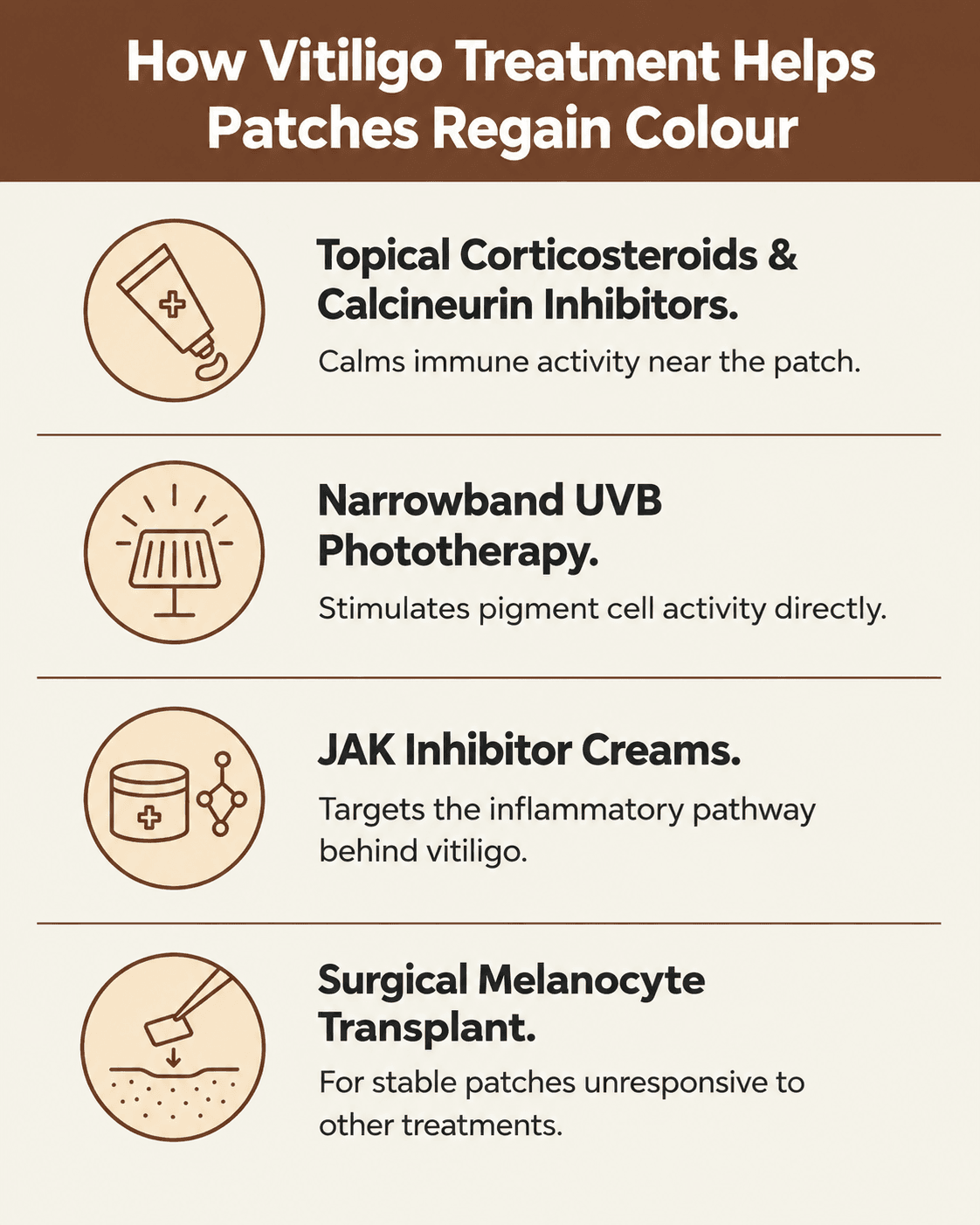
There isn’t one single approach that works for every patch, and that’s usually the first thing worth understanding. A dermatologist typically starts with the option that carries the least risk and works upward only if needed, often combining more than one method rather than relying on just one. What suits a small, recent patch on the face rarely suits a larger, older one on the hands, so the treatment plan tends to shift based on how the patch behaves, not just where it sits.
Response also isn’t linear. Some patches show early signs of pigment returning within weeks, while others take months before any visible change appears, and that gap is normal rather than a sign something’s gone wrong. What matters more than the specific method chosen is sticking with it long enough to actually judge whether it’s working.
None of these deliver overnight change. Most need several months of steady, uninterrupted use before anything visible shows up, and that’s worth knowing going in. You can also explore the clinic’s pigmentation treatments to learn more about how pigment concerns are treated.
02
What Affects Whether Vitiligo Patches Repigment?
Two patches on the same person, treated the same way, don’t always respond the same. A few things tend to explain why.
- Location on the body: face and neck patches generally do better than hands, feet, or joints, largely because those areas have more hair follicles, which act as a built-in reserve of pigment-producing cells.
- Age of the patch: one that showed up recently tends to repigment more easily than a patch that’s been sitting there, unchanged, for years.
- Skin type and extent of spread: when vitiligo has spread widely, it usually takes more than one type of treatment working together rather than relying on just one approach.
- Consistency with treatment: skipping sessions, or stopping too soon once results start showing, remains one of the most common reasons progress comes to a halt.
Managing a pigment condition long term, rather than expecting a one-time fix, applies elsewhere too. The clinic’s article on melasma treatment covers a similar case, where fading pigment and preventing its return matter more than chasing a permanent cure.
03
Why Choose Dr. Pooja Chopra?
Dr. Pooja Chopra has over 19 years behind her in dermatology, and every vitiligo case at The Skin Talk Clinic gets a plan built around that specific patch and skin type, not a template applied across the board. Vitiligo doesn’t behave predictably, so progress gets checked regularly instead of assumed. The clinic, based in Andheri West since 2012, keeps expectations realistic from the very first conversation, not something patients discover only once treatment is already underway.
04
FAQs
1. Can vitiligo be cured completely?
There’s no permanent fix, if that’s what’s being asked. Colour often does come back with the right treatment, but the underlying condition tends to stick around in the background and can resurface later. Managed is really the more honest word here, not cured.
2. How long does vitiligo treatment take to show results?
Patience matters more than people expect. Most patients are looking at a few months before anything noticeable happens, and phototherapy specifically needs weeks of regular sessions before results start to show at all.
3. Do vitiligo patches ever repigment on their own without treatment?
It happens, but rarely, and there’s no way to predict when or if it will. The vast majority of patients who see real change get there because they stuck with active treatment, not because they waited it out.
4. Which areas of the body respond best to vitiligo treatment?
The face and neck usually lead the way, largely because there’s more hair follicle activity nearby to draw on. Hands, feet, and joints are a different story. Progress there tends to be slower and less predictable.
05
References
Disclaimer: This blog is for educational purposes only and does not replace professional medical advice.
